Monthly Archive: January, 2018
Despair

Pascal claims that pride and despair can be replaced by the virtues of humility and hope. I will explore in this post what Pascal means by pride and despair as spiritual vices, and how an encounter with Christ in faith engenders the spiritual virtues of humility and hope. When Pascal writes that the knowledge of God creates prides one should understand that such knowledge has been acquired without the proper contextualization: the knowledge of humanity’s own wretchedness or misery. Similarly, the knowledge of humanity’s wretchedness leads human beings into despair if they do not have the knowledge of God. In …

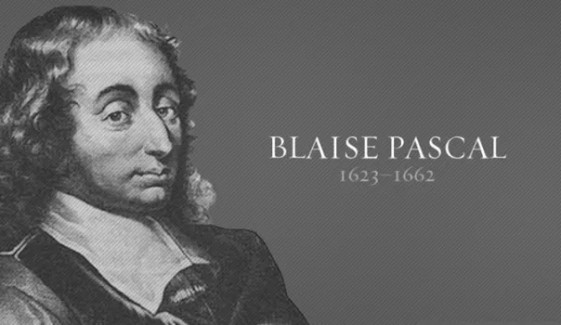
Pascal

Both Pascal’s Pensees and Kierkegaard’s “Christ the Prototype” deal with the promotion of authentic Christian faith. Both works present his readers with an apology for Christianity. Despite their common goal, Pascal and Kierkegaard use different apologetic strategies. In this respect, I will focus especially on the difference between audience and rhetorical strategies. Important to note is the culmination of Pascal’s apologetic strategy with the Wager Argument, which deals with one’s commitment to believe or not in God [cf. L418]. With the Wager argument, Pascal wants to show his audience that it is rational to believe in the existence of God. …

Vices

Aquinas in Suma Theologica (II-II, Q.20, A.4) argues that sloth leads to despair. I will briefly explore how sloth might lead to despair, using Rebecca DeYoung’s reinterpretation on the nature of sloth in her book Glittering Vices (Brazos Press, 2009). Young briefly challenges the popular notion of understanding sloth as mere laziness. She argues that the modern concept of ‘sloth’ has departed significantly from the spiritual roots with which it had connections (p. 82). Young’s aim is to retrieve the Christian notion of sloth and clarify the misunderstandings around this concept. Young clings to Aquinas, who is in the middle …

Summa Theologica

It is an open secret that these post-Covid pandemic years are troubled times. Financial issues, health struggles, lack of jobs, and the list goes on. As a Christian, I have my hope in God and His promises. However, I must admit I am susceptible to stumble when I see the storms of life ranging. By reading Aquinas, I found these illuminating passages on hope and despair, noteworthy of reading.  In his treatment of hope, one of the first aspects Aquinas clarifies is that despite what it looks like, hope is a theological virtue and a habit that has a future …