Category: Philosophy
Immanuel Kant

Kant believes natural law is written in the human heart. For him, the highest good can be understood as happiness, which is distributed in exact proportion to morality (First Critique). Therefore, in a sense, the highest good can be defined as the combination of happiness and virtue. However, this definition is not clearly held in all Kantian writings, something which arises an ambiguity that has been the object of ongoing research. For instance, in the Second Critique, Kant also speaks of the supreme good as a consummated or transcended good. A widespread way to approach the issue has been claiming …

Thomas Aquinas

For Aquinas, everything is regulated by eternal law or God’s creation order (I-II, Q.91, a.3), so it is no surprise that he understands natural law as participation of the eternal law, where natural law is of a general and teleological character (See I-II, Q.91, a.2). In Aquinas’s vision, natural law is linked with divine reason rather than with the will of God, as theologians such as Calvin would suggest. This opens the door for considering Aquinas’s notion of natural law to be expansive in the sense that natural law is associated with human’s capacity to reason and producing reflection. When …

Aristotle

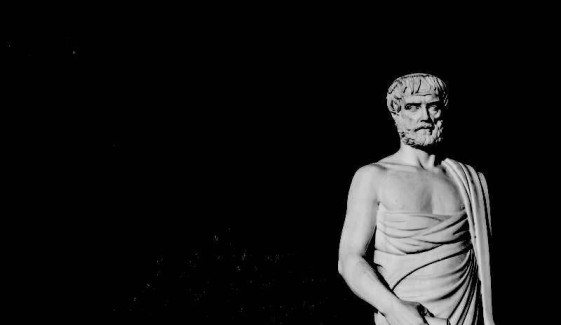
Aristotle’s starting point of his discussion of happiness can be found in Book One, Chapters 1-10 of Nicomachean Ethics, where he discusses the relation between the good of an action/decision, for instance, and its goal or purpose. Aristotle argues that all human activity aims or attains at least some good associated with it. It is not so difficult, therefore, to connect happiness with what most people consider to be good. This point is central because it constitutes one of the supporting arguments for Aristotle’s discussion that the goal or purpose of human life is reaching happiness. Although people can observe …

Jacques Ellul

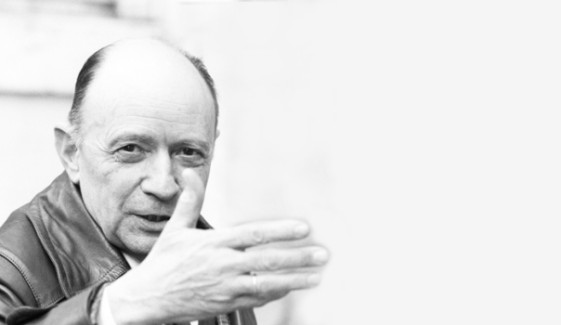
Is it possible for Christians to experience a sense of vocation in the contemporary world of work? This is the question French philosopher and Reformed theologian Jacques Ellul tries to answer. Departing from what can be considered a majority consensus in the Reformed tradition, Ellul rejects, in his view of vocation, the idea that in the Scriptures we can understand the terms vocation and work as having the same meaning. Rather, he argues that both terms must be understood differently, and for this reason, Christians cannot experience their sense of vocation in the same way people in mainstream society understand …

John Calvin and Martin Luther

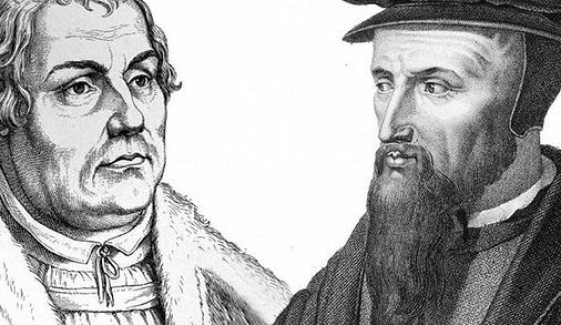
If both Martin Luther’s station-based model of vocation and John Calvin’s gift-based model have a high view of vocation (they emphasize the process of vocational discovery) and are based on the belief that God works in the world through our gifts, what is then their major differences? In the gift-based model, of which Calvin can be considered a forerunner, the dichotomy between the active and contemplative life is rejected in favor of a more holistic position. Therefore, it does not exist a separation between two kinds of life: ordinary and religious. This is so because Calvin departs from the Aristotelian/Thomistic …

The Four Reformers

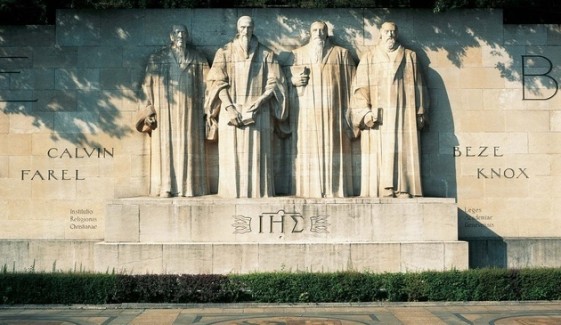
One important principle in the Reformed tradition of the Christian faith is the emphasis on the community in the development of a person’s vocation. Community is important because it helps people to flourish. Without a community, individuals will not be able to experience God’s purposes in their totality. The individual and his/her community are complementary. One needs the other. With this notion of community, the Reformed tradition has usually read the New Testament highlighting the organic character of the church, something which it serves as a framework for Reformed thinking about the nature of Christian calling and work in human …

Vocation series – Luther’s repositioning of the concept of vocation

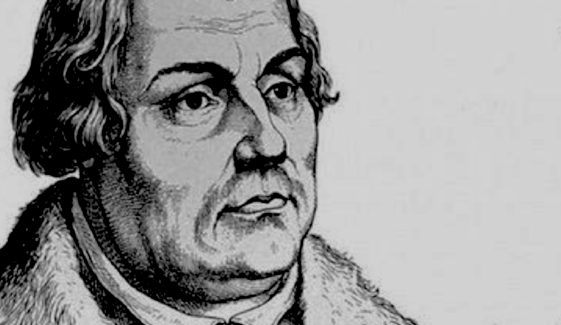
His disaffection with the monastic ideal strongly shaped Martin Luther’s theology of vocation. What Luther’s view of vocation tries to overcome is the dichotomy of serving our neighbor versus serving God (a dichotomy that Aquinas seems to have borrowed from the Greeks). Luther tries to overcome the idea that serving the neighbor has nothing to do with God at all. For Luther, stations in life are a kind of social roles. They are structures in human life and institutions. Those stations have duties attached to them. For example, being a parent could be a life station, so I would have …

Greek Philosophy

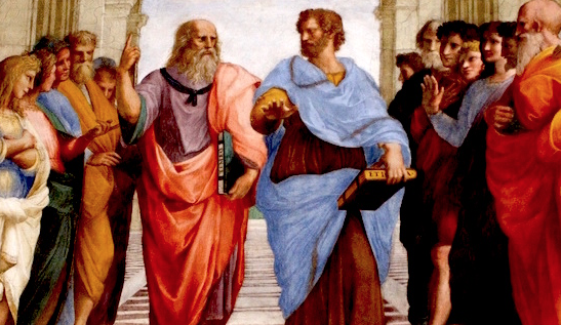
The Greeks’ attitude towards work in general terms was mainly negative. Because work seems to belong to the order of necessity, the Greeks associated it with animal nature. That is, work was understood in an instrumental sense where human beings had to work to live and satisfy their daily needs. This, in part, led the Greeks to overemphasize the contemplative life, a product of thinking and reflection, instead of labor work. Contemplative life, then, would be superior to the active life because it would allow human beings to achieve happiness and because it is precisely reason that distinguishes us from …

Plantinga

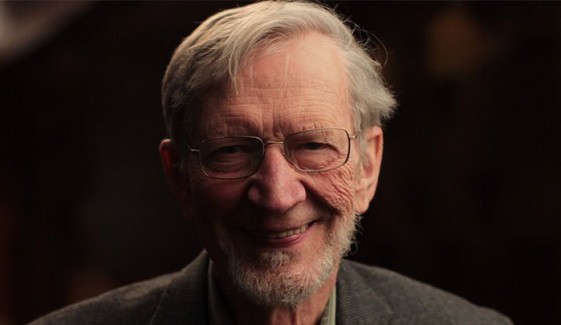
Alving Plantinga’s criticism of Aquinas’s Doctrine of Divine Simplicity cannot be ignored since currently numerous philosophers and theologians follow him regarding the downplaying or rejecting DDS. In fact, engaging Plantinga’s arguments against DDS is a needed step in order to explore whether divine simplicity can be recorded in the analytic tradition. Embracing a non-constituent ontological framework where human concepts can apply univocally to God despite the limitations of human language (p. 18), Plantinga explores how God relates to abstract properties and the conflict between DDS and attributes such as aseity and sovereignty. Plantinga discusses Aquinas’s doctrine of simplicity and offers …

Thomas Aquinas

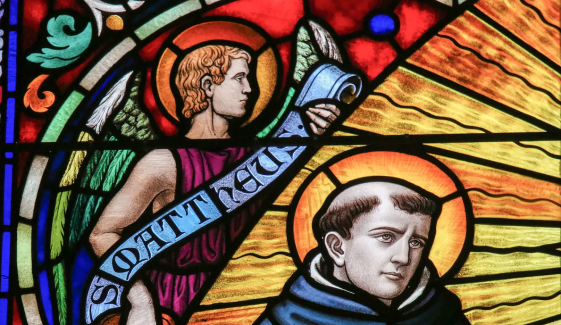
In Articles 1 through 8 of Summa Theologica I Question 3, Aquinas offers a series of philosophical arguments in favor of DDS in an apophatic way. In that regard, he addresses eight questions: whether God is a body, whether God is composed of form and matter, whether God is the same as His essence or nature, whether God essence and existence are the same in God, whether God is contained in a genus, whether there are accidents in God, whether God is altogether simple, and whether God enters into the composition of other things. The Thomistic doctrine of simplicity can be summarized as …

Despair

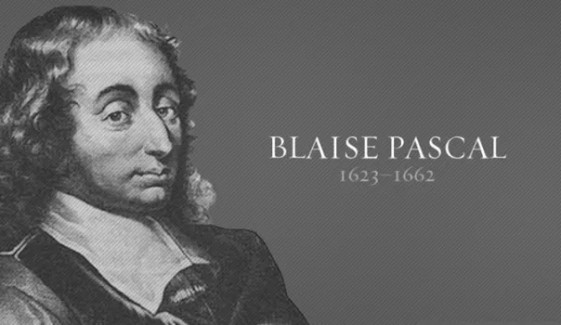
Pascal claims that pride and despair can be replaced by the virtues of humility and hope. I will explore in this post what Pascal means by pride and despair as spiritual vices, and how an encounter with Christ in faith engenders the spiritual virtues of humility and hope. When Pascal writes that the knowledge of God creates prides one should understand that such knowledge has been acquired without the proper contextualization: the knowledge of humanity’s own wretchedness or misery. Similarly, the knowledge of humanity’s wretchedness leads human beings into despair if they do not have the knowledge of God. In …

Pascal

Both Pascal’s Pensees and Kierkegaard’s “Christ the Prototype” deal with the promotion of authentic Christian faith. Both works present his readers with an apology for Christianity. Despite their common goal, Pascal and Kierkegaard use different apologetic strategies. In this respect, I will focus especially on the difference between audience and rhetorical strategies. Important to note is the culmination of Pascal’s apologetic strategy with the Wager Argument, which deals with one’s commitment to believe or not in God [cf. L418]. With the Wager argument, Pascal wants to show his audience that it is rational to believe in the existence of God. …