Monthly Archive: January, 2021
Thomas Aquinas

For Aquinas, everything is regulated by eternal law or God’s creation order (I-II, Q.91, a.3), so it is no surprise that he understands natural law as participation of the eternal law, where natural law is of a general and teleological character (See I-II, Q.91, a.2). In Aquinas’s vision, natural law is linked with divine reason rather than with the will of God, as theologians such as Calvin would suggest. This opens the door for considering Aquinas’s notion of natural law to be expansive in the sense that natural law is associated with human’s capacity to reason and producing reflection. When …

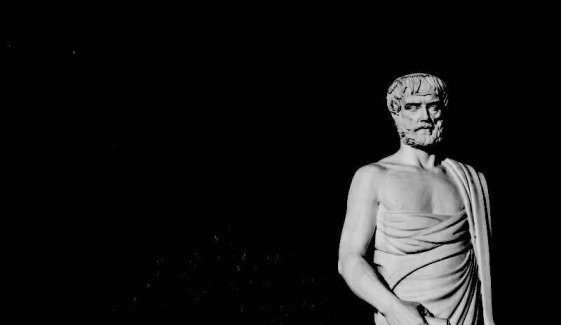
Aristotle

Aristotle’s starting point of his discussion of happiness can be found in Book One, Chapters 1-10 of Nicomachean Ethics, where he discusses the relation between the good of an action/decision, for instance, and its goal or purpose. Aristotle argues that all human activity aims or attains at least some good associated with it. It is not so difficult, therefore, to connect happiness with what most people consider to be good. This point is central because it constitutes one of the supporting arguments for Aristotle’s discussion that the goal or purpose of human life is reaching happiness. Although people can observe …