Crecí en Latinoamérica, en un país donde apenas el 4 o 5 % de la población era protestante. También era una época y un lugar donde el protestantismo se entendía casi exclusivamente como oposición a todo lo católico, y donde la mayoría de los católicos sabían muy poco sobre los protestantes, más allá de que eran herejes. La mayoría de mis compañeros de secundaria eran católicos de forma muy superficial. Pero otros eran muy devotos, y una de las manifestaciones de su devoción fue que se persignaron al saber que yo era protestante. En el primer capítulo de su libro …
When one discusses Christ’s atonement and the relation between God’s wrath and love, many questions and themes emerge. In this respect one can find at least three major themes in Calvin’s view of the atonement/redemption as discussed in the Institutes: the substitutionary dimension of Christ’s atoning work, the atonement as a sacrifice, and Christ’s triumph over sin and the powers. These themes not only emerge from Calvin’s understanding of the redemptive work of Christ but also are considered being central in such discussions. Atonement as Substitution In a few words, the atonement understood as substitution deals with the fact that …
Calvin’s understanding of natural law (also known as the interior law) can be clearly appreciated in a series of passages of his Institutes, but especially in his Commentary to Romans 2:14-16. Verse 14 of this passage states that the Gentiles by nature do what is established in the law, and this makes their natural disposition serve as a law for them. Calvin uses this verse to offer his own definition of natural law, where he connects natural law with people’s natural disposition. Calvin argues the Gentiles must have some rule of righteousness, for there is no nation so lost to …
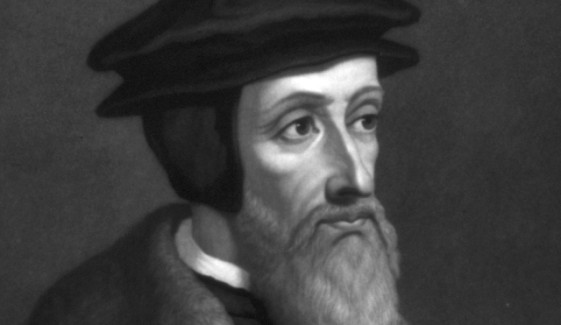
John Calvin was a sixteenth-century French theologian. On the advice of his father, he studied law at university. This was an opportunity to get acquainted with humanism, classical languages, and philosophy. In 1533, he came into contact with some folks who were against the Catholic doctrines, and this opened the door for Calvin to question his Catholic faith and experience a conversion. However, it was not until 1536 that he arrived in Geneva and left Catholicism in its totality. By the same year, he had prepared what became the first edition of the Institutes, a manual of basic teachings of …
Traditionally, the formal origin of covenant theology goes back to Cocceius. However, elements of the covenant theology can be found throughout the whole Scriptures in a broad sense. The notion and language of covenant, grace, works, and promise were well known by the early Church and Catholic theologians before the Reformation. Passages such as Gen. 3:15, Rom. 11, Deut. 29;1, and Hos. 6:7, show such language, for example. Nonetheless, properly speaking, the theology of covenant as we know it today has its origin in the larger development of the sixteenth-century Reformation. Zwingli, a contemporary of Luther, is known for defending …
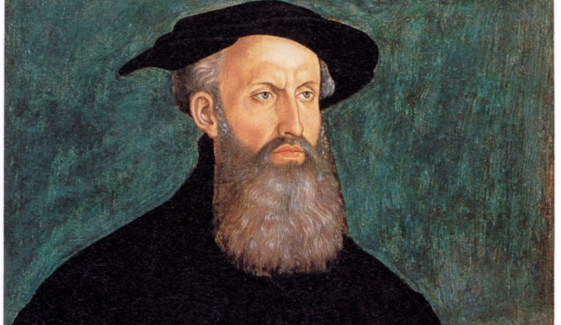
Ranging three centuries, McCoy and Bakers attempt to trace the development of federalism from 16th-century Reformers until the start of political federalism with the promulgation of the United States Constitution. They try to retrieve the role that federalism has had in modern society (political/philosophical federalism) and in theology (covenant theology), pointing it out Heinrich Bullinger as the first one to start this tradition. In general, federalism highlights the importance of covenants in the relation between God and humankind, even it can be applied to the relation between humans or social groups, for instance. In this regard, if McCoy and Baker …
Certain debate has stirred up around the name of the different Catholic movements that had the aim of defending or reforming the Catholic church. Can we call it a Counter-Reformation? What about a Catholic Reformation? Or, is there a better label to name these important movements? Many scholars who have studied the issue have questioned the same thing. Italian historian Massimo Firpo, among them. Catholic historian H. Jedin, on the basis that the term Counter-Reformation to define the period between the 16th century and 17th century where the Catholic church responded/reacted to the Protestant Reformation, argues for a redefinition of …
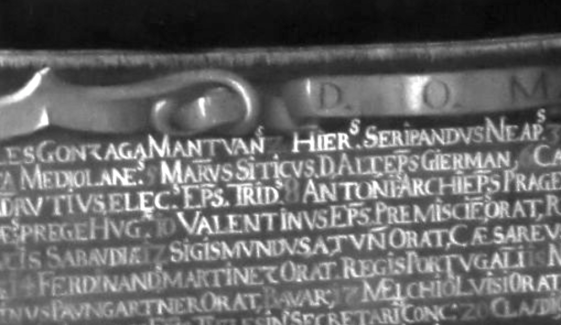
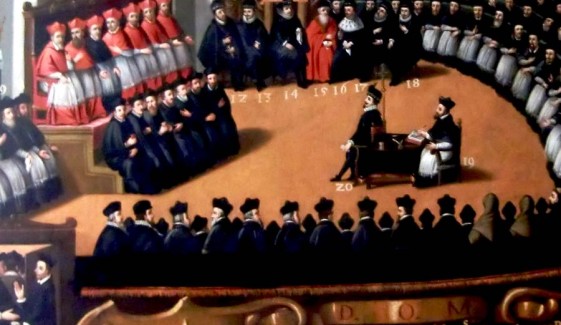
What roles did Pope Paul III, Ignatius Loyola and the Jesuits, and the Council of Trent play in the Counter-Reformation? In the following post, I will briefly answer these questions and provide a brief overview of the Catholic/Counter-Reformation, including its roots. First of all, the Catholic/Counter-Reformation Reformation was the response and/or reaction of the Catholic church toward the challenges made by the sixteenth-century Protestant Reformation. The Protestant Reformation started with Luther’s proclamation of the 95 theses in 1517 while Leo X was the Pope of the Catholic church. But it was not until the papacy of Paul III that significant …
Although the covenant was a relatively known theme among sixteenth-century early Reformers, Bullinger’s theology —as reflected in his treatise A Brief Exposition of the One and Eternal Testament or Covenant of God (hereafter Covenant of God) — develops further Zwingli’s notion of the covenant. Although we can’t say that the covenant is a central hermeneutical principle to understand all Bullinger’s theology, his development of the covenant offers some good insights. Testamentum as Covenant Due to the diversity of meanings, Bullinger starts clarifying his understanding of the term ‘testamentum.’ He understands ‘testamentum’ as an oath-based promise taking into account what Scripture …
For starters, this blog post has the purpose of introducing non-scholarly readers to the thought of Reformed theologian John Calvin on his alleged cessationism. Cessationism is one of the most controversial topics in modern evangelical Christianity, understood as the theological position that the spiritual gifts have ceased in the church. It is also worth noting that cessationism does not deny the work of the Holy Spirit within the church, but rejects the idea that the spiritual gifts continue today in the same manner they were in the Early church. Modern readers must know that although Calvin’s theology discusses the Holy …