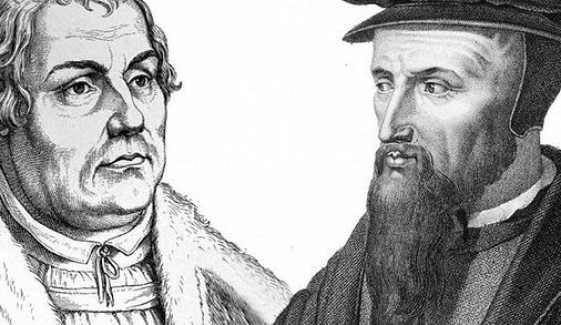
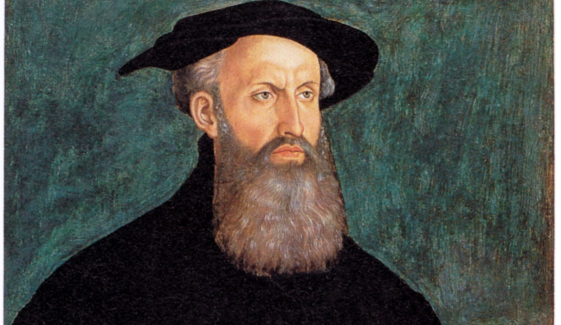
This article offers some statistics from Heinrich Bullinger’s The Decades with a brief analysis as evidence that Bullinger must be understood as the forerunner, not the father, of federal theology, due to his discussion of the covenant doctrine is limited, inconsistent, exploratory, and slightly integrated with the rest of his theological thought. Having tested Baker and McCoy’s thesis that Bullinger’s doctrine of the covenant is an organizing and central principle in most of his published works (especially in The Decades), one arrives at the conclusion that their thesis is not totally accurate. One might observe that Bullinger cannot be considered …
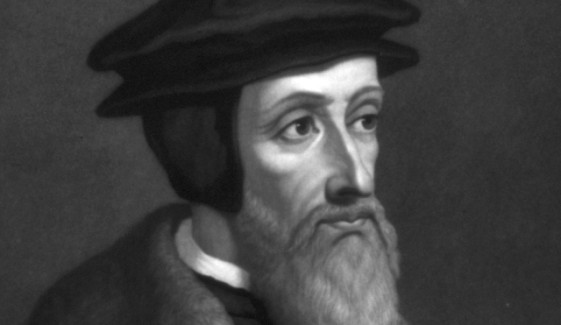
John Calvin was a sixteenth-century French theologian. On the advice of his father, he studied law at university. This was an opportunity to get acquainted with humanism, classical languages, and philosophy. In 1533, he came into contact with some folks who were against the Catholic doctrines, and this opened the door for Calvin to question his Catholic faith and experience a conversion. However, it was not until 1536 that he arrived in Geneva and left Catholicism in its totality. By the same year, he had prepared what became the first edition of the Institutes, a manual of basic teachings of …
Traditionally, the formal origin of covenant theology goes back to Cocceius. However, elements of the covenant theology can be found throughout the whole Scriptures in a broad sense. The notion and language of covenant, grace, works, and promise were well known by the early Church and Catholic theologians before the Reformation. Passages such as Gen. 3:15, Rom. 11, Deut. 29;1, and Hos. 6:7, show such language, for example. Nonetheless, properly speaking, the theology of covenant as we know it today has its origin in the larger development of the sixteenth-century Reformation. Zwingli, a contemporary of Luther, is known for defending …
Ranging three centuries, McCoy and Bakers attempt to trace the development of federalism from 16th-century Reformers until the start of political federalism with the promulgation of the United States Constitution. They try to retrieve the role that federalism has had in modern society (political/philosophical federalism) and in theology (covenant theology), pointing it out Heinrich Bullinger as the first one to start this tradition. In general, federalism highlights the importance of covenants in the relation between God and humankind, even it can be applied to the relation between humans or social groups, for instance. In this regard, if McCoy and Baker …
If both Martin Luther’s station-based model of vocation and John Calvin’s gift-based model have a high view of vocation (they emphasize the process of vocational discovery) and are based on the belief that God works in the world through our gifts, what is then their major differences? In the gift-based model, of which Calvin can be considered a forerunner, the dichotomy between the active and contemplative life is rejected in favor of a more holistic position. Therefore, it does not exist a separation between two kinds of life: ordinary and religious. This is so because Calvin departs from the Aristotelian/Thomistic …
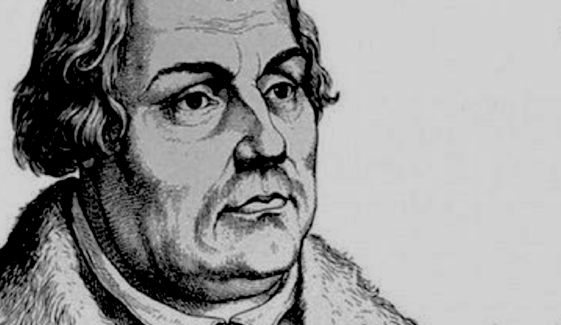
His disaffection with the monastic ideal strongly shaped Martin Luther’s theology of vocation. What Luther’s view of vocation tries to overcome is the dichotomy of serving our neighbor versus serving God (a dichotomy that Aquinas seems to have borrowed from the Greeks). Luther tries to overcome the idea that serving the neighbor has nothing to do with God at all. For Luther, stations in life are a kind of social roles. They are structures in human life and institutions. Those stations have duties attached to them. For example, being a parent could be a life station, so I would have …
Although the covenant was a relatively known theme among sixteenth-century early Reformers, Bullinger’s theology —as reflected in his treatise A Brief Exposition of the One and Eternal Testament or Covenant of God (hereafter Covenant of God) — develops further Zwingli’s notion of the covenant. Although we can’t say that the covenant is a central hermeneutical principle to understand all Bullinger’s theology, his development of the covenant offers some good insights. Testamentum as Covenant Due to the diversity of meanings, Bullinger starts clarifying his understanding of the term ‘testamentum.’ He understands ‘testamentum’ as an oath-based promise taking into account what Scripture …
For starters, this blog post has the purpose of introducing non-scholarly readers to the thought of Reformed theologian John Calvin on his alleged cessationism. Cessationism is one of the most controversial topics in modern evangelical Christianity, understood as the theological position that the spiritual gifts have ceased in the church. It is also worth noting that cessationism does not deny the work of the Holy Spirit within the church, but rejects the idea that the spiritual gifts continue today in the same manner they were in the Early church. Modern readers must know that although Calvin’s theology discusses the Holy …