Topic: John Calvin
Atonement

When one discusses Christ’s atonement and the relation between God’s wrath and love, many questions and themes emerge. In this respect one can find at least three major themes in Calvin’s view of the atonement/redemption as discussed in the Institutes: the substitutionary dimension of Christ’s atoning work, the atonement as a sacrifice, and Christ’s triumph over sin and the powers. These themes not only emerge from Calvin’s understanding of the redemptive work of Christ but also are considered being central in such discussions. Atonement as Substitution In a few words, the atonement understood as substitution deals with the fact that …

John Calvin in Geneva

Calvin’s understanding of natural law (also known as the interior law) can be clearly appreciated in a series of passages of his Institutes, but especially in his Commentary to Romans 2:14-16. Verse 14 of this passage states that the Gentiles by nature do what is established in the law, and this makes their natural disposition serve as a law for them. Calvin uses this verse to offer his own definition of natural law, where he connects natural law with people’s natural disposition. Calvin argues the Gentiles must have some rule of righteousness, for there is no nation so lost to …

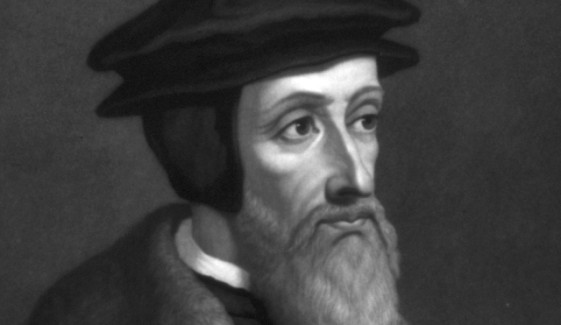
John Calvin Portrait

The purpose of this study is exploring John Calvin’s two-fold notion of faith in the 1559 Institutes and its central implications for pastoral theology in the emerging Reformed tradition in order to reclaim a broader and contextualized understanding of pastoral care and its relation with faith formation. To that end, this paper will focus on the ways the emerging Reformed church of second mid-sixteenth century in Geneva applied the Calvinian notion of faith to pastoral theology. It also explores some applications of such an understanding, especially for the modern American-Dutch reformed church. In the Reformed faith Calvin’s two-fold notion of …

Calvin's Institutes

John Calvin was a sixteenth-century French theologian. On the advice of his father, he studied law at university. This was an opportunity to get acquainted with humanism, classical languages, and philosophy. In 1533, he came into contact with some folks who were against the Catholic doctrines, and this opened the door for Calvin to question his Catholic faith and experience a conversion. However, it was not until 1536 that he arrived in Geneva and left Catholicism in its totality. By the same year, he had prepared what became the first edition of the Institutes, a manual of basic teachings of …

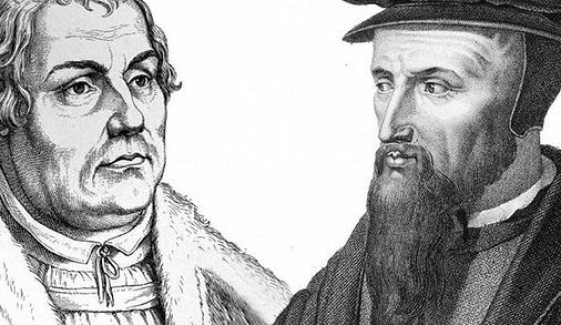
John Calvin and Martin Luther

If both Martin Luther’s station-based model of vocation and John Calvin’s gift-based model have a high view of vocation (they emphasize the process of vocational discovery) and are based on the belief that God works in the world through our gifts, what is then their major differences? In the gift-based model, of which Calvin can be considered a forerunner, the dichotomy between the active and contemplative life is rejected in favor of a more holistic position. Therefore, it does not exist a separation between two kinds of life: ordinary and religious. This is so because Calvin departs from the Aristotelian/Thomistic …

Ongoing Process

Justification and sanctification are two concepts that are related and inseparable; however, they represent two different or distinct notions. Justification and sanctification are indeed two benefits given by God through Jesus Christ. In virtue of the assertion above, one may say that justification and sanctification are God’s gifts because “Christ was given to us by God’s generosity.” (Calvin, Institutes, III.11.1.) The problem arises when one merges both terms into one and uses them as they were interchangeable. This error should be avoided in order to understand better and coherently the doctrine of salvation and union with Christ in light of the Scriptures. …

Calvinism

The belief of election (predestination) is one of the most important doctrines in the Scriptures since it guarantees believers that God is in control of their salvation and that this salvation does not depend on them. One question that arises when one studies the Scriptures is why some people believe and accept the Gospel while others do not. Reformed theologian John Calvin defines predestination as “God’s eternal decree by which he compacted with himself what he willed to become of each person.” (Calvin, Institutes, III.26.25) It is based on God’s pleasure and depends on him only. Therefore, predestination is based on …

John Calvin

For starters, this blog post has the purpose of introducing non-scholarly readers to the thought of Reformed theologian John Calvin on his alleged cessationism. Cessationism is one of the most controversial topics in modern evangelical Christianity, understood as the theological position that the spiritual gifts have ceased in the church. It is also worth noting that cessationism does not deny the work of the Holy Spirit within the church, but rejects the idea that the spiritual gifts continue today in the same manner they were in the Early church.  Modern readers must know that although Calvin’s theology discusses the Holy …