I don’t know why many Christians are extremely negative about the future. I do not deny the sad events that have happened in the last decades; however; I believe that in this life the true church has a taste of the heavenly joy — a joy that will be completed in heaven. God has graciously given his children a glimpse of eternal joy now, yet the perfect joy God has promised in the Scriptures is still to come. Christian hope is set on the glorious day when the number of people who have been called to the church is completed, …

When the Scriptures speak of the church as an assembly, one should remember that the church is not a human project, but a God’s project that He has given to us so that every Christian can participate in communion with Him. This makes morality of high significance in the church. In this short post, I will offer three reasons the church must firmly engage in morality. The Church Is Called to be a Community of Saints. Even though the visible church is not made of morally perfect persons, the church is called to be a community of saints — of …
Related to the doctrine of the immutability of God —that God, his character, his promises, his covenant are unchangeable— it is God’s eternal purposes. Both Christianity and Judaism affirm God’s character as unchangeable. However, when we look for God’s purposes, we find different understandings of them. In this respect, I will briefly present in this blog post the positions of well-known modern theologians —who belong to four different traditions— on how they approach God’s eternal purposes. First Approach: Evangelical Open Theism God at War: The Bible and Spiritual Conflict, written by Gregory Boyd, defends the position known as open theism. …
All Christians who have believed in God and His message constitute the Body of Christ, the Church (from the Greek ekklesia, which means assembly), which is universal and invisible. However, although believers are united in Christ with one faith, the members of this Body also share different sociocultural backgrounds and have diverse thought about how the Christian life should be, among other aspects. This is the visible church. Thus, while one can find a particular congregation that emphasizes the role of worship in the community of faith, one also finds another congregation that believes that a social gospel is what …
One of the current evangelical theologians who has explored the figure of the Devil/the Powers is Gregory Boyd with his 2014 book titled, God at War: The Bible and Spiritual Conflict. From Boyd’s understanding of the Powers, the personalization and the reality of these entities in the world is noteworthy. Although I disagree with Boyd’s interpretation of God’s providence and other topics, he makes a good point by calling the church not to ignore the reality of the evil forces in the world. Dr. Boogaart, about Boyd’s God at War book and his understanding of the Devil, states: [For Boyd, the …
Justification and sanctification are two concepts that are related and inseparable; however, they represent two different or distinct notions. Justification and sanctification are indeed two benefits given by God through Jesus Christ. In virtue of the assertion above, one may say that justification and sanctification are God’s gifts because “Christ was given to us by God’s generosity.” (Calvin, Institutes, III.11.1.) The problem arises when one merges both terms into one and uses them as they were interchangeable. This error should be avoided in order to understand better and coherently the doctrine of salvation and union with Christ in light of the Scriptures. …
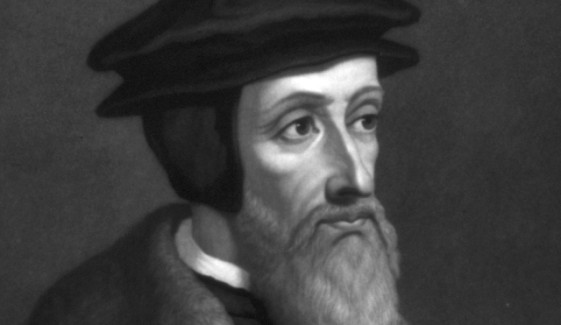
The belief of election (predestination) is one of the most important doctrines in the Scriptures since it guarantees believers that God is in control of their salvation and that this salvation does not depend on them. One question that arises when one studies the Scriptures is why some people believe and accept the Gospel while others do not. Reformed theologian John Calvin defines predestination as “God’s eternal decree by which he compacted with himself what he willed to become of each person.” (Calvin, Institutes, III.26.25) It is based on God’s pleasure and depends on him only. Therefore, predestination is based on …
The Holy Spirit is the Third Person of the Trinity (Art. 11, Belgic Confession). He is omnipresent and uncreated, among other divine attributes. He is the sanctifier of God’s people and the sustainer of life. He works with every Christian by leading them to the Word of God and preparing them for Christ. As Calvin states, the Holy Spirit is the bond of our union with Christ by faith (Calvin, Institutes, 3.1). The Holy Spirit also teaches the Church to preserve the unity of the Body of Christ. His role is not passive, but active regarding what He does in God’s people. …
When I consider your heavens, the work of your fingers, the moon and the stars, which you have set in place, what is mankind that you are mindful of them, human beings that you care for them? You have made them a little lower than the angels and crowned them with glory and honor. You made them rulers over the works of your hands; you put everything under their feet. Psalm 8:3-6 In order to reflect upon how Christ is our savior, I think it is also important to reflect about the reasons why humankind exists, the nature of sin, …
Talking about God has been a divisive topic in modern culture. While for some people, God is just a force rather than a person, others do not distinguish between the creator and the creation. From a biblical and Christian perspective, God is not an idea, concept, religion, or a philosophical system. He, instead, is an underived and powerful spiritual person who has always existed from before time. Because of this, there are some necessary aspects one should know about God. God Has Revealed to Humanity The knowledge about God is not something human beings need to discover, but to receive. God …
For starters, this blog post has the purpose of introducing non-scholarly readers to the thought of Reformed theologian John Calvin on his alleged cessationism. Cessationism is one of the most controversial topics in modern evangelical Christianity, understood as the theological position that the spiritual gifts have ceased in the church. It is also worth noting that cessationism does not deny the work of the Holy Spirit within the church, but rejects the idea that the spiritual gifts continue today in the same manner they were in the Early church. Modern readers must know that although Calvin’s theology discusses the Holy …
The Shawshank Redemption is about the experiences Andy had in prison when he was falsely convicted of murdering his wife and her lover. One theme portrayed in the movie is the role of hope in the lives of human beings. This film explores a series of motifs that help us understand better the process of restoration in the practice of providing pastoral care to Christians, even though this is a secular film. One of the thought-provoking quotes of the movie is when Andy states, “Hope is a good thing, maybe the best of things.” It is this hope that leads …