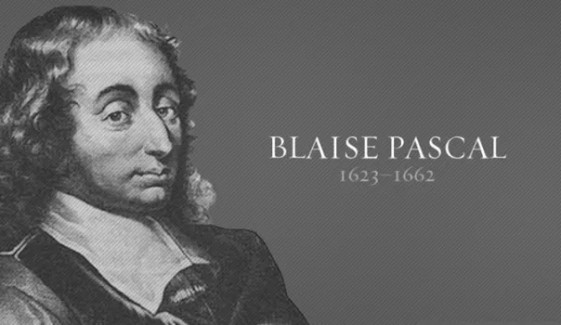
Both Pascal’s Pensees and Kierkegaard’s “Christ the Prototype” deal with the promotion of authentic Christian faith. Both works present his readers with an apology for Christianity. Despite their common goal, Pascal and Kierkegaard use different apologetic strategies. In this respect, I will focus especially on the difference between audience and rhetorical strategies. Important to note is the culmination of Pascal’s apologetic strategy with the Wager Argument, which deals with one’s commitment to believe or not in God [cf. L418]. With the Wager argument, Pascal wants to show his audience that it is rational to believe in the existence of God. …
Aquinas in Suma Theologica (II-II, Q.20, A.4) argues that sloth leads to despair. I will briefly explore how sloth might lead to despair, using Rebecca DeYoung’s reinterpretation on the nature of sloth in her book Glittering Vices (Brazos Press, 2009). Young briefly challenges the popular notion of understanding sloth as mere laziness. She argues that the modern concept of ‘sloth’ has departed significantly from the spiritual roots with which it had connections (p. 82). Young’s aim is to retrieve the Christian notion of sloth and clarify the misunderstandings around this concept. Young clings to Aquinas, who is in the middle …
It is an open secret that these post-Covid pandemic years are troubled times. Financial issues, health struggles, lack of jobs, and the list goes on. As a Christian, I have my hope in God and His promises. However, I must admit I am susceptible to stumble when I see the storms of life ranging. By reading Aquinas, I found these illuminating passages on hope and despair, noteworthy of reading. In his treatment of hope, one of the first aspects Aquinas clarifies is that despite what it looks like, hope is a theological virtue and a habit that has a future …
Kierkegaard tells us that the Socratic tradition understood sin as ignorance. The problem that Kierkegaard finds with such a notion is its partial definition, which “leaves unclear how ignorance is to be more precisely understood, the question of its origin, etc. ” (p. 120). In Socrates’ view, if someone sins, such sinful action happens because one does it involuntarily and out of ignorance. Sinful actions are not rooted elsewhere but in knowledge itself. In this respect, Socrates’s definition of sin has a serious issue: “If sin is ignorance, then sin does not really exist for sin is precisely consciousness” (p. …
In her controversial book chapter titled “For God So Loved the World” (From Christianity, Patriarchy, and Abuse: A Feminist Critique,1-30, NY: Pilgrim Press, 1989), Joanne C. Brown and Rebecca Parker (hereafter Brown & Parker) begin their discussion claiming that women have been convinced by society that their suffering is justified. By giving examples of how women have been discriminated against in several societies and cultures worldwide, the authors want to convince their readers that Christianity has place an important role in such discrimination. “Christianity has been a primary in many women’s lives, the primary force in shaping our acceptance of …
This post is about Friedrich Schleiermacher’s First Speech titled “Defence” from his book On Religion: Speeches to Its Cultural Despisers (1799). I will summarize the main points of the speech, and at the end I will provide a brief reflection. By “cultural despisers,” Schleiermacher is speaking of the cultural elite of his time in Germany (cf. p. 10). What they despised was religion itself, or more specifically, the traditional understanding of Christian doctrine and its dogmas. Regarding the purpose of the speech, Schleiermacher is giving an apologia for his own perspective (panentheistic) on true religion in terms of the Romantic …
Dutch theologian Herman Bavinck presents a broader notion of the image of God, something important in health care chaplaincy. For him, human beings do not have the image of God. The image of God is not something or a characteristic that we all bear, have, or acquire. As human beings, we all are the image of God. Our body, soul, and spirit, represent integrally the image of God. So there is no difference between the image and likeness of God, since all aspects of the human being reflect God perfectly . All that is God is found in us in …
One important aspect I had to develop as a chaplain was increasing my self-awareness. In that regard, reflecting on what biblical character I identified with the most served this purpose. In my case, I identified strongly with is Gideon, the judge. While for some, Gideon is a courageous and strong figure; for others, he is just a flawed hero. The way we see Gideon depends a lot on the cultural lens we use. In the end, Gideon was a person of his time. He lived in a culture where the religious and the cultural were so ingrained in the social …
Following Gerardo Marti’s line of reasoning, I can argue that ethnic identity is an asset in the church or in chaplaincy, where ethnic identity is a means to find points of encounter between people. In order to do that, it is important to focus on the sociocultural and racial dynamics in those settings. The question I ask is whether pastoral care is independent of the context where it happens. People have different worldviews in our society, but sometimes those views are frequently downplayed. I wonder how we will offer appropriate pastoral care if those issues are ignored or if we …
In this post, I will summarize the content of Jewish scholar Wolfson’s discussion regarding patristic and medieval anthropology. His essay is titled “Immortality and Resurrection in the Philosophy of the Church Fathers,” originally published in the Harvard Divinity School Bulletin in 1956, and reprinted in Harry A. Wolfson, Religious Philosophy: A Group of Essays (Massachusetts: Belknap Press, 1961): 69-83. After discussing Wolfson’s ideas, I will then be providing a brief conclusion regarding his exposition of the topic. After giving some brief examples concerning how Socrates (a dualist Greek philosopher), Jesus (a dualist first-century Jew), and Rabban Johanan, the son of …
In his book How to Have a Healing Ministry without Making Your Church Sick, Pentecostal theologian Peter Wagner discusses the ministry of healing prayer and the reasons a congregation should have one. I think nobody would disagree that the care of sick people is a common area among Christian denominations that deserves attention despite tradition. Despite Wagner offers readers an interesting point of view on healing prayer, he may stir some controversy when he claims that “some times God heals directly, and sometimes he uses means for the healing but he seldom heals directly unless we ask him to” (p. …
One way to deal with the vice of envy in the church is by serving others. By helping others, God may allow those dealing with this vice to understand how he works in their lives and cares about all his people. If we would like to be healthy individuals, it is vital to understand first that God created humankind to live in a healthy community where there is no space for envy and competition. We ought to rejoice in the wellness and success of others, not fill ourselves with bitterness because God has given us different gifts and abilities for …