Holy Spirit Art

The Holy Spirit is the Third Person of the Trinity (Art. 11, Belgic Confession). He is omnipresent and uncreated, among other divine attributes. He is the sanctifier of God’s people and the sustainer of life. He works with every Christian by leading them to the Word of God and preparing them for Christ. As Calvin states, the Holy Spirit is the bond of our union with Christ by faith (Calvin, Institutes, 3.1). The Holy Spirit also teaches the Church to preserve the unity of the Body of Christ. His role is not passive, but active regarding what He does in God’s people. …

Christ Our Savior

When I consider your heavens, the work of your fingers, the moon and the stars, which you have set in place, what is mankind that you are mindful of them, human beings that you care for them? You have made them a little lower than the angels and crowned them with glory and honor. You made them rulers over the works of your hands; you put everything under their feet. Psalm 8:3-6 In order to reflect upon how Christ is our savior, I think it is also important to reflect about the reasons why humankind exists, the nature of sin, …

Knowledge of God

Talking about God has been a divisive topic in modern culture. While for some people, God is just a force rather than a person, others do not distinguish between the creator and the creation. From a biblical and Christian perspective, God is not an idea, concept, religion, or a philosophical system. He, instead, is an underived and powerful spiritual person who has always existed from before time. Because of this, there are some necessary aspects one should know about God. God Has Revealed to Humanity The knowledge about God is not something human beings need to discover, but to receive. God …

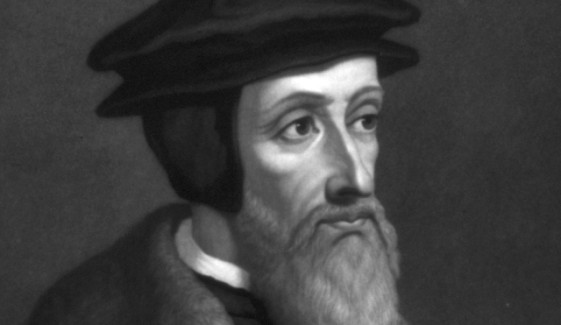
John Calvin

For starters, this blog post has the purpose of introducing non-scholarly readers to the thought of Reformed theologian John Calvin on his alleged cessationism. Cessationism is one of the most controversial topics in modern evangelical Christianity, understood as the theological position that the spiritual gifts have ceased in the church. It is also worth noting that cessationism does not deny the work of the Holy Spirit within the church, but rejects the idea that the spiritual gifts continue today in the same manner they were in the Early church.  Modern readers must know that although Calvin’s theology discusses the Holy …

Shawshank Redemption

The Shawshank Redemption is about the experiences Andy had in prison when he was falsely convicted of murdering his wife and her lover. One theme portrayed in the movie is the role of hope in the lives of human beings. This film explores a series of motifs that help us understand better the process of restoration in the practice of providing pastoral care to Christians, even though this is a secular film. One of the thought-provoking quotes of the movie is when Andy states, “Hope is a good thing, maybe the best of things.” It is this hope that leads …

Jonathan Edwards

In A Treatise Concerning Religious Affections, Jonathan Edwards asserts that the way Christians live is the real sign of having a true Christian faith. Since “true religion, in great part, consists in holy affections,” a believer who lives in the true religion necessarily should have holy affections (p. 141). However, the opposite is not true: the fact that someone might possess several religious affections does not mean she is living out a true religion. Discerning the mysterious ways of the Spirit’s work, therefore, is never done with one’s understanding but of the Spirit’s. Then, the result of being obedient to …

Christ Pantocrator

When Christianity began expanding to other lands outside of Jerusalem, at the beginning, there were religious practices of the Early Church that linked Christianity to Jewish traditions. As time passed by, many cultures adopted Christianity, and those practices disappeared, giving birth to a local gospel. Places like Europe and North America later developed their “own” Christianity, and when missionaries from these places went abroad in a missional field such as Asia or Africa, not only they shared the Gospel but also their culture, customs, and worldviews. An example of this process, Father Vincent J. Donovan in Christianity Rediscovered shares significant insights about …

Omnipotence

Regarding the nature of God, Thomas Oden in Classic Christianity (New York: HarperOne, 1992) discusses the different kinds of attributes we apply to God, such as pre-relational attributes (pre-time, pre-world, pre-space), essential attributes (e.g., infinite, eternal, immeasurable), relational attributes (omnipresence, omniscience, omnipotence), moral attributes (holiness, justice, love), and personal attributes (life, will, spirit). On the same subject, Michael S. Horton in Lord and Servant: A Covenant Christology (Kentucky: Westminster John Knox Press, 2005) tells us about communicable vs. incommunicable attributes of God, where the second ones are attributes that only God can have. And finally, Justo L. González in Mañana: Christian Theology …

Missions

Authors Richard Bauckham in Bible and Mission and Leslie Newbigin in The Open Secret discuss the concept of mission and how it should be understood correctly by Christians today. While Bauckham initially explains the idea of metanarrative and universalist cultures, and how overemphasizing them challenges the way Christians do mission today; Newbigin, instead, associates missions with the very ministry of Jesus and his baptism by John the Baptist. Both authors agree that mission is God’s work as he uses mission as a means of not only proclaiming the Gospel but also bringing justice to the entire world. Bauckham writes: This …

Mosaic

The New Testament as we know is not only varied in its literary and artistic style but also in its content. Nonetheless, the New Testament has a very strong unity when presents Christ as the savior of the world and his ministry as a predestined plan that God orchestrated before the foundation of the world. All that is said in the New Testament points out Christ directly or indirectly. For example, the Gospel of Luke, the Book of Romans, and the Book of Hebrews may differ on their understandings of the meaning of Jesus’ death, yet together they paint one …

Fergusson - The Cosmos

The Cosmos and the Creator: An Introduction to the Theology of Creation by David Fergusson, London: SPCK, 1998. Pp. 115. $23.99 softcover. The Cosmos and the Creator: An Introduction to the Theology of Creation is a collection of four essays based on the Cunningham Lectures given by Scottish theologian and Professor David A.S. Fergusson at the University of Edinburgh in 1996. Every chapter of the book represents an essay. In this book, Fergusson discusses the Christian doctrine of creation based on the failure of modern theoretical approaches to offer an adequate understanding of the God-world relation. In that regard he rightly states, “the …