Stewardship

Recently, I took a summer course on the intersection of finance and stewardship. I did all the readings and decided to share some things I learned there. The first book assigned was Jeff Manion’s Satisfied: Discovering Contentment in a World of Consumption. In a nutshell, the lesson I learned can be summarized in a few words… Christians ought to emphasize the necessity for all to give – not just the affluent since giving itself constitutes a spiritual practice that can shape our spirit. In light of Jeff Manion’s book, especially Chapter 13 titled “The Power of Sharing,” I believe the …

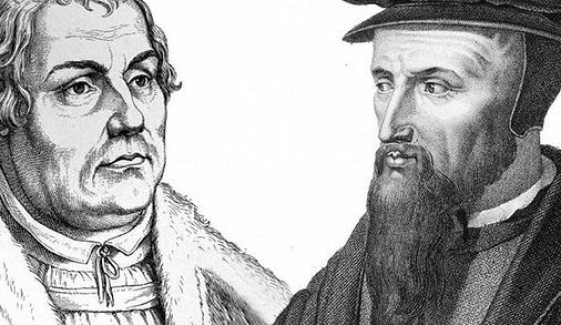
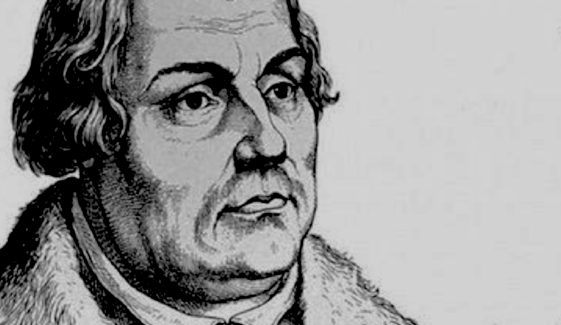
John Calvin and Martin Luther

If both Martin Luther’s station-based model of vocation and John Calvin’s gift-based model have a high view of vocation (they emphasize the process of vocational discovery) and are based on the belief that God works in the world through our gifts, what is then their major differences? In the gift-based model, of which Calvin can be considered a forerunner, the dichotomy between the active and contemplative life is rejected in favor of a more holistic position. Therefore, it does not exist a separation between two kinds of life: ordinary and religious. This is so because Calvin departs from the Aristotelian/Thomistic …

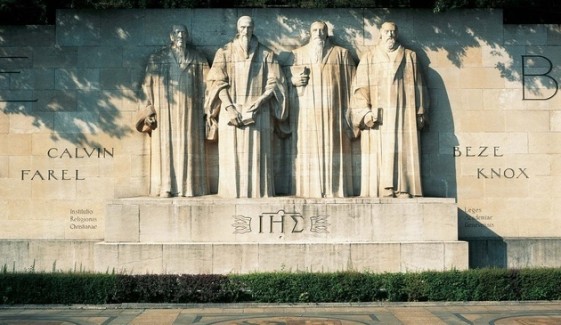
The Four Reformers

One important principle in the Reformed tradition of the Christian faith is the emphasis on the community in the development of a person’s vocation. Community is important because it helps people to flourish. Without a community, individuals will not be able to experience God’s purposes in their totality. The individual and his/her community are complementary. One needs the other. With this notion of community, the Reformed tradition has usually read the New Testament highlighting the organic character of the church, something which it serves as a framework for Reformed thinking about the nature of Christian calling and work in human …

Vocation series – Luther’s repositioning of the concept of vocation

His disaffection with the monastic ideal strongly shaped Martin Luther’s theology of vocation. What Luther’s view of vocation tries to overcome is the dichotomy of serving our neighbor versus serving God (a dichotomy that Aquinas seems to have borrowed from the Greeks). Luther tries to overcome the idea that serving the neighbor has nothing to do with God at all. For Luther, stations in life are a kind of social roles. They are structures in human life and institutions. Those stations have duties attached to them. For example, being a parent could be a life station, so I would have …

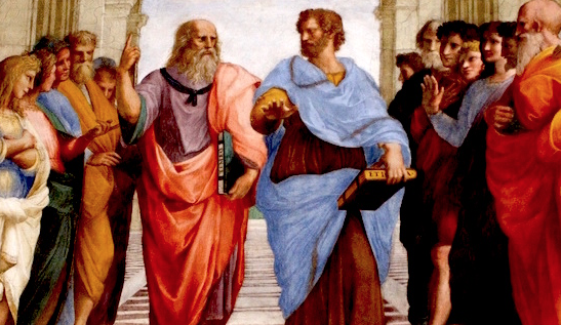
Greek Philosophy

The Greeks’ attitude towards work in general terms was mainly negative. Because work seems to belong to the order of necessity, the Greeks associated it with animal nature. That is, work was understood in an instrumental sense where human beings had to work to live and satisfy their daily needs. This, in part, led the Greeks to overemphasize the contemplative life, a product of thinking and reflection, instead of labor work. Contemplative life, then, would be superior to the active life because it would allow human beings to achieve happiness and because it is precisely reason that distinguishes us from …

Evolution

There are many areas where we can appreciate Kuyper’s criticism of culture. One of those areas is his interaction between science and theology, and more specifically, science with biblical revelation. Kuyper debated evolution in his 1899 rectoral oration at the Free University of Amsterdam. He criticized a series of features of Darwin’s theory of evolution. These objections include the theory’s features of naturalism, its mechanistic understanding of the world, its atheistic worldview, and its a-teleological characteristic. Without a doubt, the theory of evolution has been one of the most controversial topics for modern Christians. Kuyper’s article ‘evolution’ not only shows …

Rene Girard

In Part I and II of René Girard’s I see Satan Fall Like a Lightning, René Girard, a French Christian philosopher, offers a sociological and philosophical perspective on the atonement as understood in the Christian tradition emphasizing the similarities between the mythological and the biblical of the Gospels. For him the way in which mythology and the Gospels characterize their victims is noteworthy. In this respect, Girard introduces the concept of scapegoats which are “innocent targets of a senseless collective transference that is mimetic and mechanical.” (p. 1) In other words, the scapegoat is a member of a community who is …

Every Square Inch

In “It Shall Not Be So Among You,” Kuyper presents us with his first sermon after the church dispute around 1883. American scholar James Bratt claims that this writing is important because of the principles Kuyper offers us by using applied theology to the situation he was facing. From this, one will observe Kuyper’s role as a modern church reformer. Such a role, however, was not free of controversy. The Doleantie, as Kuyper called it, shows us not only Kuyper’s zeal about the church but also his fierce personality. As Bratt argues, “his church reform proved to be the greatest …

Abraham Kuyper

James Bratt’s following words could summarize one of the goals Abraham Kuyper achieved as a Christian thinker. Kuyper “upgrade[d] Calvinism from an old dogma to an active life, to put Modernist methods to orthodox ends, and to redefine the church to make it fit, and challenge, the contemporary world” (p. 42). I concur. However, how did Kuyper do it in theoretical terms? In trying to answer the former question, I will look to another Bratt’s work on Kuyper. One of the issues that emerges from the chapters “Modernism” and “Conservatism & Orthodoxy” in James Bratt’s Abraham Kuyper: A Centennial Reader is …

Abraham Kuyper and his development of a christian worldview

In Abraham Kuyper: A Centennial Reader, James Bratt cleans the image of Kuyper (1837-1920) from long-held misconceptions and caricatures. One of the aspects Bratt highlights is the multivocal character of Kuyper’s career: state leader, theologian, politician, scholar, and journalist. If we want to interpret Kuyper’s writings correctly, a perspective informed by an accurate social-historical context of Kuyper’s life is a must. Part of the problem arises from the fact that Kuyper “was a man of many voices. He was multivocal in the number of fields in which he spoke: church and theology, politics, and society, culture and education, international affairs and …

Augustine

By exploring the implications of Augustine’s doctrine of sin, Christian theologian Jesse Couenhoven analyzes the link between the doctrine of original sin and sexism. He argues that sexism can be understood as a form or outworking of original sin. His point of departure is the existence of common elements between Augustine’s view of sin and the perspectives of many feminist scholars. One of those elements is the nature of sin/responsibility.  Original Sin and the Criticism Made by Feminist Scholars A general criticism made by feminist scholars (for instance, Valerie Saiving) is that the Christian tradition has paid nothing or little …

Spiritual Care

Gregory the Great was the leader of the Western Church in the sixth century. In the preface to the Third Book of his work titled Pastoral Care, Gregory suggests that church leaders along with their congregants must be in agreement if they want the church to be edified through the Scriptures. Such accordance would allow these leaders to preach the same doctrine of the gospel but using different ways to exhort. Gregory writes, “every teacher, in order to edify all in the one virtue of charity, must touch the hearts of his hearers by using one and the same doctrine, …